Columbus homes built before 1950 in Victorian Village and Olde Towne East often have plaster walls and balloon framing that trap water behind lath. Once winter temperatures drop and pipes freeze, a small leak can saturate multiple floors before anyone notices. We map moisture with meters rather than guessing, then remove baseboards and drill vent holes so air can reach hidden cavities. Skipping this step leaves pockets that later grow mold when summer humidity returns.
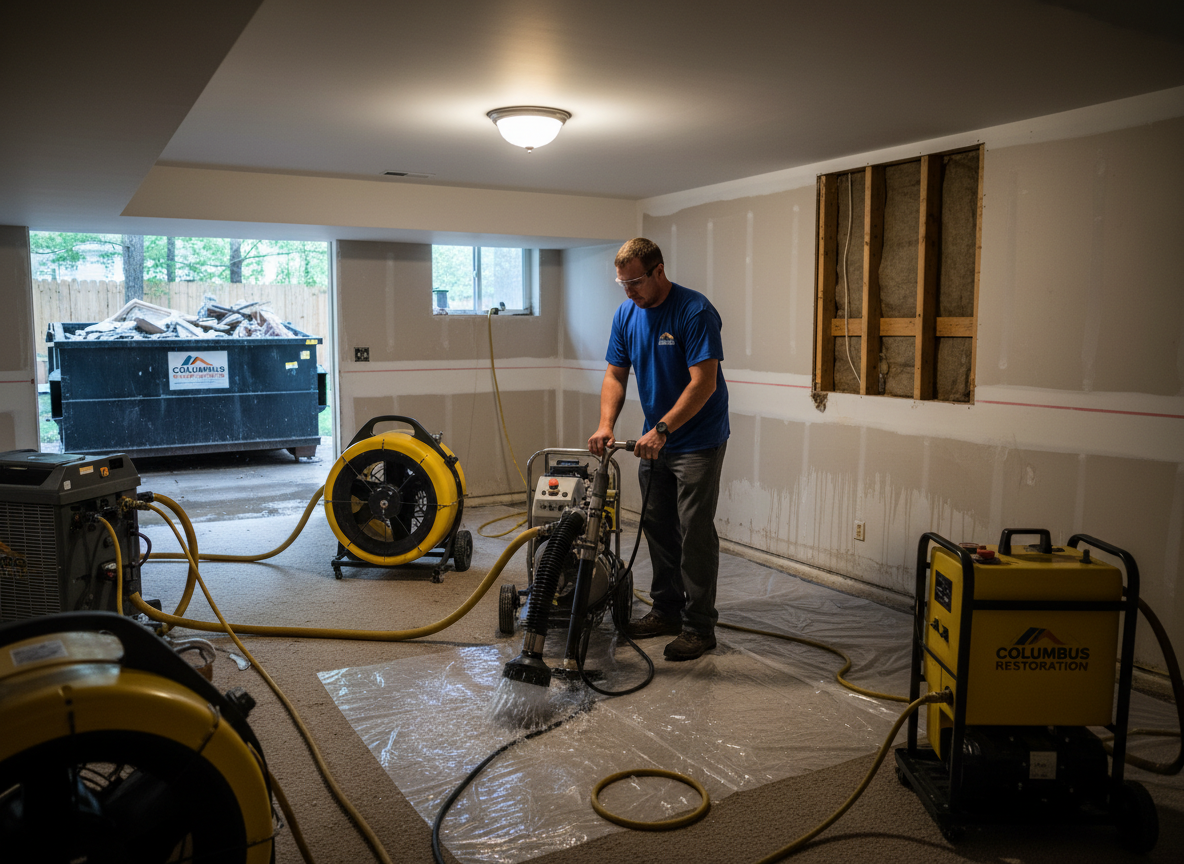
Franklin County sits on clay-heavy soil that drains slowly, so basements in Clintonville and Grandview Heights stay damp long after rain stops. We use subfloor fans and dehumidifiers sized for 1,200-square-foot footprints typical here, running them until wood moisture content reads under 12 percent. Nearby cities like Dayton see similar patterns, but Columbus summers bring higher dew points that extend drying times by two or three days.
Nationwide Arena events and Ohio State football weekends increase demand for same-day response because traffic on I-70 and 315 can add an hour to travel from our Hilliard shop. We keep extraction trucks staged near Franklinton and Hilltop so we reach Short North and Bexley properties before drywall begins to delaminate.
Technician insight
In Columbus, the thing that catches most people out with water damage restoration is hidden moisture trapped in the plaster-and-lath walls of 1920s homes in German Village and Victorian Village. Clay soil keeps basements damp for days after storms, so if you only dry the surface you will see mold return once summer humidity climbs.
Frozen Pipe in Bexley Brick Home
A burst pipe on the second floor of a 1930s Bexley home sent water through plaster ceilings into the dining room below. We mapped moisture across three rooms, extracted water, and ran drying equipment for five days until readings stabilized. Walls were opened, treated, and closed with matching plaster patches so the family could use the space again without lingering odors.
Water Damage Restoration Service Services We Offer
✓Emergency Water Extraction
Rapid removal of standing water from basements and first floors using truck-mounted pumps sized for Columbus clay-soil flooding.
✓Structural Drying
Placement of commercial air movers and dehumidifiers to bring wall cavities and subfloors to safe moisture levels in older Victorian and brick homes.
✓Carpet and Hardwood Restoration
Cleaning, drying, and reinstallation of flooring materials common in German Village and Bexley properties after clean-water events.
✓Ceiling and Wall Cavity Repair
Removal of saturated drywall or plaster, antimicrobial treatment, and replacement to match original finishes in pre-war neighborhoods.
✓Sewage and Category 3 Cleanup
Full containment, removal, and disinfection of contaminated water from older sewer lines that serve many Linden and Hilltop homes.
Water Damage Restoration Service Cost in Columbus, OH
| Service | Typical Range | What Affects It |
|---|---|---|
| Emergency Extraction | $600–$1,800 | Depends on water volume and number of floors affected. |
| Full Structural Drying | $800–$2,200 | Varies with home size and how long water sat before discovery. |
| Category 3 Sewage Cleanup | $1,200–$3,000 | Includes containment and disposal; higher in multi-unit buildings. |
Ranges are typical for Columbus, OH and confirmed with an exact written quote before any work starts.
How it works
- 1
On-Site Assessment
We inspect every affected room, use moisture meters on walls and floors, and document the source before any equipment arrives.
- 2
Water Removal
Truck-mounted extractors pull standing water while we protect unaffected areas with plastic barriers.
- 3
Drying And Monitoring
Air movers and dehumidifiers run until readings drop below 12 percent; we return daily to adjust equipment.
- 4
Restoration Work
We replace damaged drywall, trim, and flooring, then coordinate with painters so the home returns to normal use.
Pricing
Most jobs fall into mid-range pricing because Columbus homes vary widely in age and square footage.