Columbus winters bring repeated freeze-thaw cycles that crack copper and PEX lines in the older brick homes of German Village, Victorian Village, and Bexley. When a pipe bursts on the second floor, water travels along plaster lath and joists, saturating ceilings and walls before reaching the basement. Technicians must cut exploratory openings early to map the full path rather than relying on surface moisture readings alone.
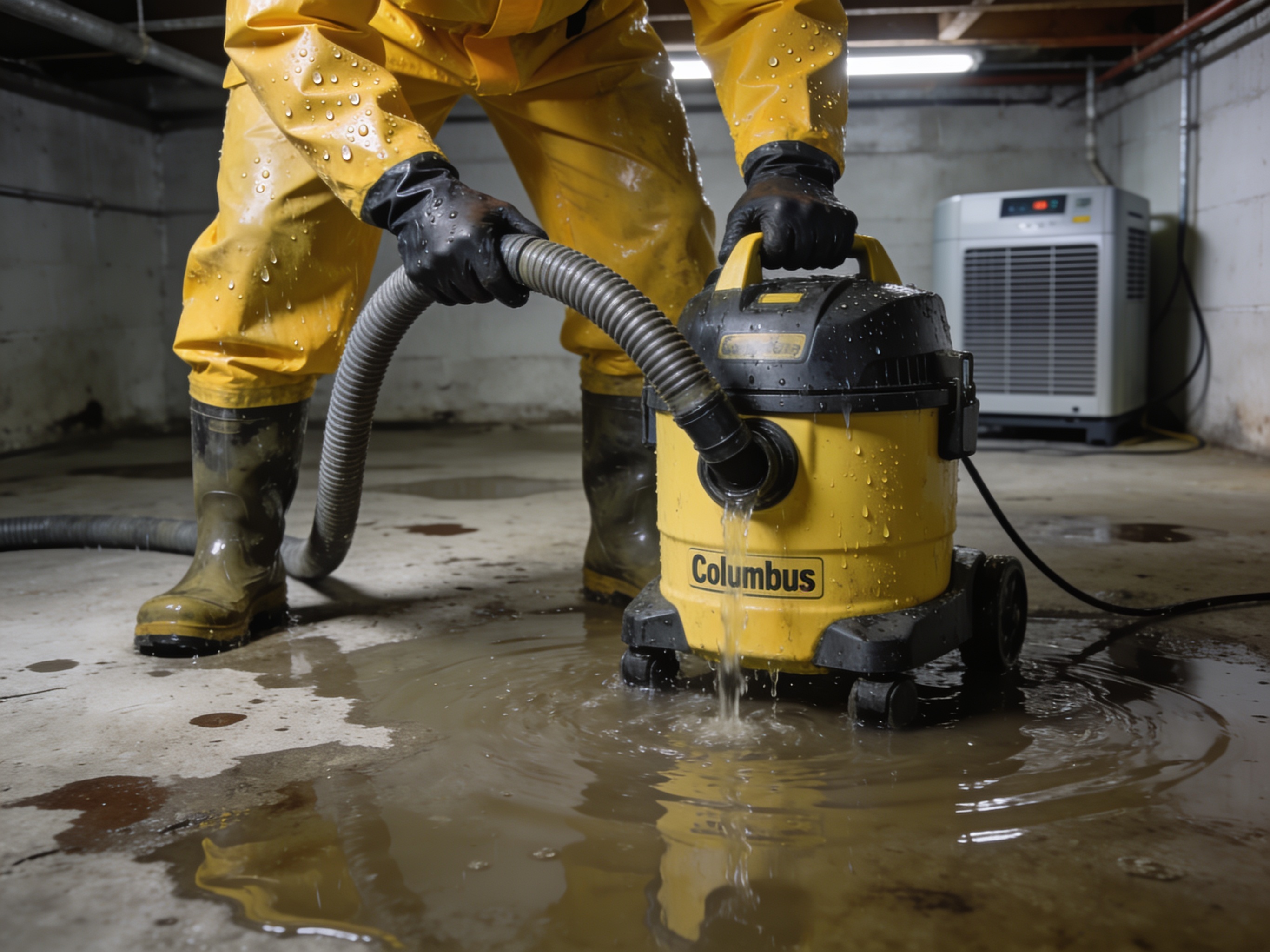
Summer thunderstorms dump heavy rain on the flat lots common in Clintonville and Grandview Heights, overwhelming downspouts and foundation drains. Clay-heavy soil around Hilltop and Franklinton holds water against basement walls for days, raising the risk of hydrostatic pressure pushing through old mortar joints. Extraction crews use submersible pumps rated for silt-laden water and follow up with air movers angled to pull moisture from behind baseboards before mold sets in.
Nationwide Arena events and Ohio State game days increase the chance of appliance or water-heater failures in rental properties near Short North and Olde Towne East. Quick shut-off and removal of standing water prevents electrical hazards around outdated knob-and-tube wiring still found in some Linden and Franklinton structures. Every job includes documenting hidden cavities so insurance adjusters see the actual extent of affected material.
Franklin County building code requires permits for structural drying that affects load-bearing walls, so crews coordinate with the city when walls must stay open longer than 72 hours. Technicians carry moisture meters calibrated for both hardwood and drywall to avoid over-drying one material while leaving another wet.
Technician insight
In Columbus the thing that catches most people out with Emergency Water Removal is how quickly water moves through the balloon-framed walls of 1920s homes in German Village and Victorian Village; once it hits the plaster, it can travel two stories before you see a stain on the first floor.
Pipe Burst in Short North Duplex
A supply line froze and split on the second floor of a 1910 duplex. Water traveled down exterior walls and pooled in the shared basement. Crews extracted 400 gallons, opened two wall cavities, and ran drying equipment for four days before handing the property back to the owner with documented moisture readings under 12 percent.
Emergency Water Removal Services We Offer
✓Burst Pipe Extraction
Locate and remove standing water from supply-line failures common in pre-1960 homes in Bexley and German Village.
✓Appliance Leak Removal
Rapid pump-out and containment after water-heater or washing-machine failures in rental units near Short North.
✓Basement Flood Extraction
Silt and rainwater removal from foundation seepage after storms affecting Clintonville and Grandview Heights lots.
✓Ceiling and Wall Cavity Drying
Targeted extraction behind plaster and lath in Victorian Village and Olde Towne East homes where water travels unseen.
✓Carpet and Pad Water Removal
Lift, extract, and dispose of saturated flooring in Franklinton and Hilltop properties before secondary damage occurs.
Emergency Water Removal Cost in Columbus, OH
| Service | Typical Range | What Affects It |
|---|---|---|
| Single-room extraction | $350–$650 | Ground-floor rooms with minimal migration |
| Multi-level extraction | $800–$1,600 | Water traveling from upper floors into basements |
| Basement flood pump-out | $500–$1,200 | Silt load and depth increase labor time |
| After-hours emergency call | $150–$250 | Added to base extraction cost on weekends |
Ranges are typical for Columbus, OH and confirmed with an exact written quote before any work starts.
How it works
- 1
On-Site Assessment
Technician arrives, identifies water source, maps migration paths through the structure, and checks for electrical hazards.
- 2
Water Extraction
Submersible pumps and truck-mounted units remove standing water while protecting salvageable materials where possible.
- 3
Hidden Moisture Detection
Infrared and pin meters locate moisture behind walls and under floors in older Columbus housing stock.
- 4
Containment And Documentation
Affected zones are isolated and photographed for insurance records before drying equipment is placed.
Pricing
Upfront written quotes after inspection; price varies by volume of water and number of affected levels.