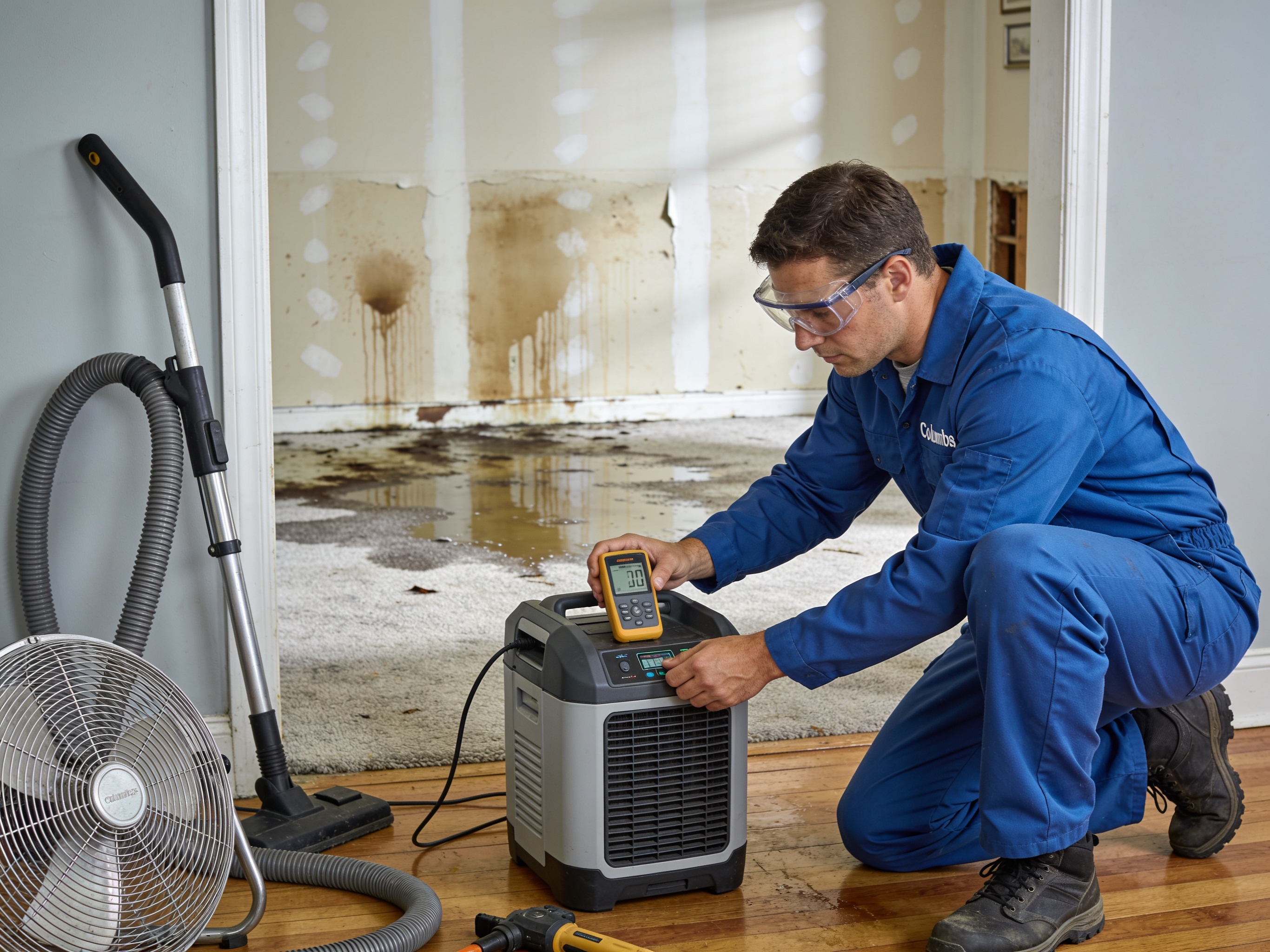
Columbus homes built before 1960 in German Village, Victorian Village and Olde Towne East often have cast-iron or galvanized supply lines that corrode from within. When these lines fail, water migrates along joist bays and into plaster walls, creating hidden pockets that standard fans miss. Technicians must open walls at multiple elevations and use moisture meters on brick foundations common in these neighborhoods to locate every wet area before mold sets in during the humid summer months.
Winter pipe bursts are frequent in Bexley and Grandview Heights because the humid continental climate brings rapid temperature swings that stress older copper lines running through uninsulated crawl spaces. Once water escapes, it pools against limestone foundations and travels toward the Ohio Statehouse district where many row houses share party walls. Restoration crews must isolate units quickly to prevent cross-contamination and document moisture levels for insurance adjusters who expect readings below 15 percent before drywall replacement begins.
Flat terrain in Franklinton and parts of the Hilltop allows stormwater to back up through floor drains after heavy summer rains. Sewage-laden water requires negative-air machines and antimicrobial application on subfloors before new underlayment can be installed. Crews also check for compromised sill plates in these older frame structures, because prolonged saturation here leads to rot that affects load-bearing walls long after visible water is gone.
Technician insight
In Columbus the thing that catches most people out with water damage repair is how quickly moisture travels along the brick party walls in German Village and Victorian Village row houses. A leak on the second floor can saturate first-floor plaster two units away before anyone notices, especially after a January freeze when copper lines split. We always map the full length of shared walls instead of stopping at the obvious wet spot.
Winter Pipe Burst In Bexley
A copper supply line split during a cold snap and water ran behind plaster in a 1920s Bexley home. Mapping showed saturation extending into the adjacent dining room and down into the crawl space. Crews extracted water, ran drying equipment for four days, treated affected framing, and documented levels for the insurer so repairs could begin without hidden mold risk.
Water Damage Repair Services We Offer
✓Burst Pipe Water Extraction
Rapid removal of standing water from supply-line failures common in pre-1960 Columbus homes, followed by targeted drying of joist bays and plaster walls.
✓Storm and Flood Drying
Dehumidification and air-mover placement after heavy rain events that affect Franklinton and Linden basements where flat grades allow water to pool against foundations.
✓Sewage Cleanup and Sanitation
Safe extraction and disinfection of contaminated water from backed-up floor drains in older row houses throughout German Village and Short North.
✓Crawl Space Moisture Removal
Vapor-barrier installation and drying in unconditioned spaces beneath Bexley and Clintonville homes where winter pipe leaks often go unnoticed until floors cup.
✓Plaster and Lath Wall Restoration
Selective demolition and drying of historic plaster walls in Victorian Village and Olde Towne East without damaging original trim or brick.
Water Damage Repair Cost in Columbus, OH
| Service | Typical Range | What Affects It |
|---|---|---|
| Initial Assessment And Moisture Mapping | $125–$275 | Larger homes in Bexley or multi-unit buildings in Short North increase time on site. |
| Water Extraction Per Room | $350–$650 | Sewage contamination or deep carpet padding raises the range. |
| Equipment Rental Per Day | $150–$300 | Number of dehumidifiers and air movers needed depends on square footage and winter humidity. |
| Plaster Wall Drying And Reset | $400–$900 | Historic homes in German Village require extra care to preserve trim. |
Ranges are typical for Columbus, OH and confirmed with an exact written quote before any work starts.
How it works
- 1
On-Site Moisture Mapping
Technicians use meters and infrared cameras to trace water migration through Columbus-era framing and foundations.
- 2
Water Removal
Pumps and extraction wands clear standing water from basements and crawl spaces in affected Franklin County neighborhoods.
- 3
Structural Drying
Industrial dehumidifiers and air movers run until moisture readings reach acceptable levels for the local climate.
- 4
Sanitation And Documentation
Antimicrobial treatment and photo logs prepare the site for repairs and insurance review.
Pricing
Most water damage repair projects in Columbus fall between a few hundred dollars for contained leaks and several thousand when structural drying and material removal are required.