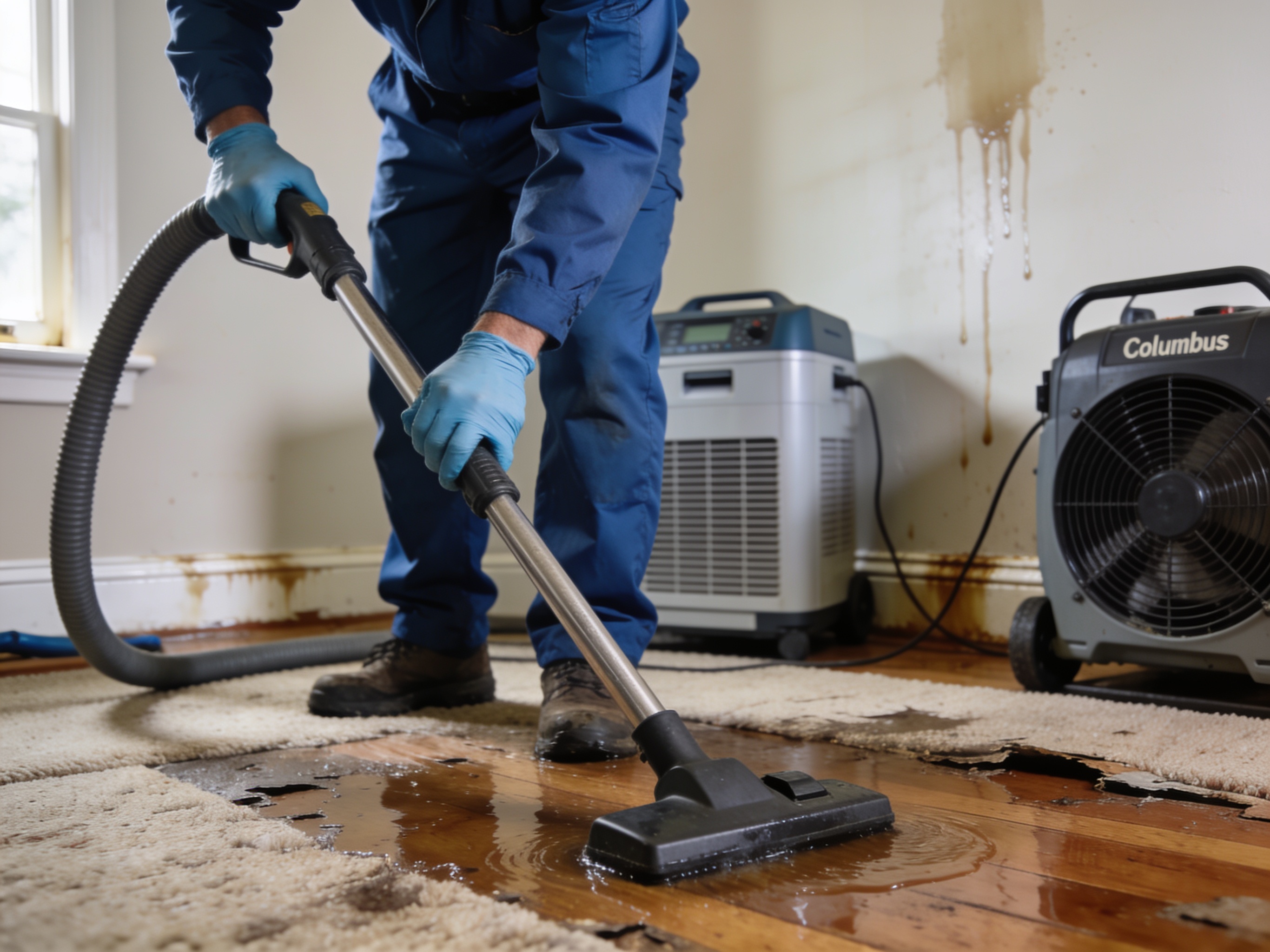
Columbus sits in a humid continental climate where winter freezes often burst pipes in pre-1950 homes common in German Village, Victorian Village and Olde Towne East. Clay-rich Franklin County soil holds moisture against foundations, so water that reaches basements in Franklinton or the Hilltop rarely evaporates on its own and quickly reaches subfloor joists. Technicians must pull baseboards and drill weep holes in these older balloon-frame houses to prevent hidden rot that later shows up as warped hardwood floors.
Nationwide Arena events and heavy rain can overwhelm storm drains near the Short North and Arena District, sending water into commercial spaces with concrete-over-wood floors. In these cases extraction alone is not enough; crews run industrial dehumidifiers for several days while monitoring moisture meters in the slab to stay below 12 percent before any finish work begins. Failure to reach that level leaves owners dealing with recurring musty odors months later.
Warm summer humidity in Linden and Clintonville accelerates mold growth on drywall within 48 hours of a leak. Cleanup therefore includes removing affected wall sections at least 18 inches past the visible water line and treating the cavity with antimicrobial solutions rated for porous materials. Homeowners who skip this step often face larger remediation bills when insurance adjusters inspect the property.
Nearby cities such as Dayton and Cincinnati share similar freeze-thaw cycles, yet Columbus crews see more slab leaks in ranch homes built on fill dirt in Grandview Heights. These jobs require floor saws and temporary shoring because the soil underneath can shift once saturated, changing how quickly drying equipment can be placed.
Technician insight
In Columbus the thing that catches most people out with Water Damage Cleanup is how quickly clay soil in Franklinton and the Hilltop keeps basement walls damp for weeks after the initial leak, so drying equipment has to stay longer than homeowners expect.
Pipe Burst in German Village Row House
Frozen supply line split in an 1890s brick home, sending water under oak floors. Crew removed baseboards, drilled weep holes, and ran drying mats for six days until joist readings dropped below target. Homeowner avoided full floor replacement.
Water Damage Cleanup Services We Offer
✓Emergency Water Extraction
Removes standing water from basements and crawl spaces in Columbus homes using truck-mounted pumps sized for Franklin County clay soils.
✓Structural Drying and Dehumidification
Places industrial air movers and dehumidifiers in affected rooms while tracking moisture levels in lath-and-plaster walls common in German Village and Bexley.
✓Carpet and Pad Removal
Cuts and disposes of water-soaked carpet and padding, then treats subfloors to stop mold before reinstallation in Clintonville and Grandview Heights homes.
✓Hardwood Floor Restoration
Drills weep holes and uses targeted drying mats on oak floors in Victorian Village and Short North properties to prevent cupping after pipe bursts.
✓Basement Wall Moisture Control
Applies vapor barriers and drainage mats along foundation walls in Franklinton and Hilltop houses where clay soil keeps moisture against the concrete.
Water Damage Cleanup Cost in Columbus, OH
| Service | Typical Range | What Affects It |
|---|---|---|
| Small room extraction and drying | $450–$950 | Increases with hardwood or plaster walls |
| Basement water removal | $800–$2,200 | Depends on depth and soil saturation |
| Full floor drying after pipe burst | $1,200–$3,500 | Higher in older homes with multiple layers |
| Post-storm commercial space drying | $2,000–$5,000 | Varies by square footage and equipment days |
Ranges are typical for Columbus, OH and confirmed with an exact written quote before any work starts.
How it works
- 1
On-Site Assessment
Technician inspects all affected rooms, uses moisture meters on walls and floors, and documents water source for insurance in Columbus neighborhoods.
- 2
Water Removal
Pumps and wands extract standing water from carpets, hardwood and concrete in the shortest time possible to limit secondary damage.
- 3
Drying And Monitoring
Equipment runs continuously while daily readings track moisture drop until materials reach acceptable levels for the home's age and construction.
- 4
Final Sanitation
Antimicrobial treatment is applied to exposed surfaces before any reconstruction work begins.
Pricing
Cost depends on square footage, water category, and drying time required; most jobs start with an on-site assessment.